Can Naruto's Live-Action Movie Break the Anime Curse? A Blueprint for Success
On July 10, 2026, Lionsgate and director Destin Daniel Cretton launched a global casting search for the lead roles in the long-awaited live-action Naruto movie. The news should have been met with pure excitement. Instead, the dominant reaction was skepticism — and in some cases, outright dread.
"Another series they're gonna fuck up with a live-action adaption 😭"
That reaction is understandable. For years, Hollywood has struggled to bring beloved anime to the big screen. Dragon Ball Evolution became a punchline. Cowboy Bebop was canceled after one season. The list of disappointments is long. But in 2023, something changed. Netflix's One Piece broke the pattern, earning critical praise, fan approval, and record-breaking viewership.
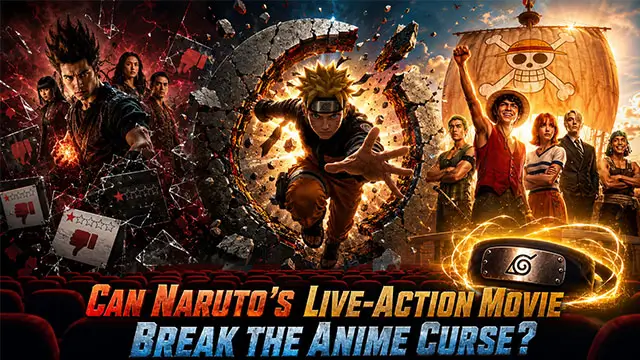
So, can Naruto's live-action movie break the anime curse? This article points out the direction by combining the success of One Piece and the failure of Dragon Ball.
⚠️Dragonball Evolution: A Warning Sign for Hollywood
When discussing live-action anime adaptations, one film stands alone as the ultimate cautionary tale. That is Dragonball Evolution (2009), which holds a 15% critic score and a 20% audience score on Rotten Tomatoes.
More than 15 years later, it remains "the benchmark for how not to make a live-action anime adaptation".
What went wrong? Here is the answer.
1. It Changed the Identity of the Original Story
One of the biggest mistakes Dragonball Evolution made was changing the personality and motivations of its main characters.
Dragon Ball fans were connected with:
Goku's innocence
adventure spirit
unique humor
martial arts fantasy
But the live-action adaptation changed too many fundamental elements, making it feel disconnected from the source material.
For this adaptation, some fans wrote reviews criticizing the film on Rotten Tomatoes:
"A live action adaptation that misses the essence of its source material and feels disconnected from what fans expected. "
2. It Focused on Surface-Level Elements
Another problem with many failed anime adaptations is that filmmakers often focus on the elements that are easiest to see:
- special powers
- famous costumes
- action sequences
- iconic locations.
But these are only the surface of what makes a franchise successful. Moreover, Dragon Ball is remembered by:
- Goku's journey from a strange child to a legendary warrior
- the friendships created through battles
- the rivalries that pushed characters to grow.
So, some fans criticized all these surface-level elements:
"Chintzy effects, badly overdubbed dialogue, an idiotic script and a cave set that looks exactly like the 'caves' on log-flume rides."
✨The One Piece Formula: How Netflix Changed the Conversation
After years of disappointing anime adaptations, many fans believed that bringing a beloved Japanese franchise into live action was almost impossible.
Then Netflix's One Piece changed the conversation.
So why could this film succeed?
1. Characters Came Before Spectacle
The biggest strength of One Piece has never been only its massive world or creative battles.
Instead of rushing to showcase every major event, it focused on making audiences connect with:
Luffy's optimism and determination
Zoro's loyalty and ambition
Nami's personal struggles
the bond between the Straw Hat crew.
Some fans thought highly of actors' performance:
"Emily Rudd and Mackenyu, who portrayed Nami and Zoro on TV, respectively, have also done a great job in carefully mimicking the voice tones, behavior, and personality of the designated characters."
2. Respect the Source Material
The adaptation didn't try to "fix" or "improve" the original. It understood what made One Piece beloved and translated that faithfully to live-action, so it preserved:
the adventurous spirit
the emotional relationships
the personalities of the characters
the sense of wonder.
Some fans loved this faithful:
"The adaptation is a warmer approach, contrasting it with adaptations where creatives 'take the reins themselves, assume complete creative control and push back on alternative input'."
3. Creator Involved in the Production
Eiichiro Oda, the creator of One Piece, was "heavily involved in One Piece's development at Netflix and helped steer the ship".
From selecting the Straw Hat crew to putting forward revision, Oda had the final say throughout the production.
Just like reviewers analyzed the movie's success:
"The show succeeded because it brought on board the right crew of creatives—including Eiichiro Oda himself—to make sure that this ambitious live-action adaptation confidently swims to success."
🗺️The Blueprint: What Naruto Needs to Get Right
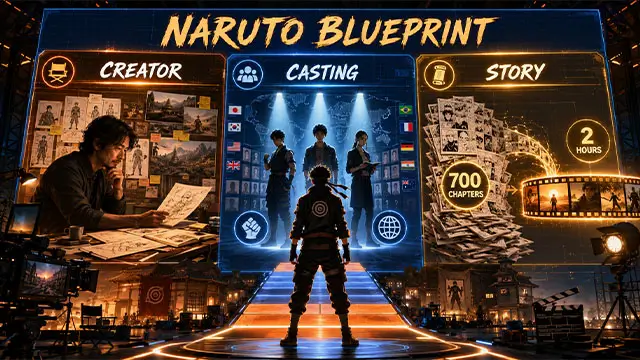
After studying the failures of Dragonball Evolution and the success of One Piece, the path forward for Naruto's live-action adaptation becomes clearer, namely creator, cast, and the story.
1. Creator Involvement
One Piece succeeded because Oda was at the table. Dragonball Evolution failed because Akira Toriyama was not.
The good news: Kishimoto is already involved. He has given the project his blessing "on several occasions" and, according to the publishing imprint behind the Naruto manga, will be directly "involved with the production" of the film.
He called the Hollywood adaptation a "miracle" and expressed excitement about meeting the actors who will bring his characters to life.
2. Casting
The casting call is looking for actors aged 16 to 20 with fluent English and action potential. The search is global, with North American casting overseen by Carmen Cuba Casting and Korean casting handled by Sukim Company.
This is promising. A global search—not a Hollywood-only one—signals a commitment to finding actors who can actually embody these characters, not just names that sell tickets. But the challenge is immense. Finding three unknown actors in that age range who can act, fight, speak fluent English, and capture the essence of characters beloved by millions—that's a tall order.
3. The Story
This is the hardest question. With 700 chapters and only two hours, what do you choose?
Three options present themselves:
| Option | What It Covers | Pros | Cons |
|---|---|---|---|
| The Land of Waves Arc | Zabuza and Haku | Emotionally complete, narratively self-contained | Feels small for a "blockbuster" |
| The Chunin Exams Arc | Introduces the full world, many characters | Epic scale, rich world-building | Impossible to fit in 2 hours |
| An Original Compressed Story | New script using core settings | Creative freedom | Risks alienating fans (Dragonball Evolution territory) |
One Piece solved this by adapting the East Blue saga across multiple episodes. Naruto doesn't have that luxury. Whatever it chooses, it will have to make peace with leaving beloved material on the cutting room floor and communicate that choice transparently to fans.
Conclusion
The Naruto live-action movie faces longer odds than almost any adaptation in recent memory. A 700-chapter story compressed into two hours. A fanbase that is already bracing for disappointment.
But One Piece proved that the curse is not unbreakable and that when creators are empowered, when source material is respected, and when the right people are in the right rooms, anime can survive the transition to live-action.
Are you looking forward to this film?
FAQ
What is the "anime live-action curse"?
It's the long-standing pattern in Hollywood where most live-action adaptations of anime and manga are critically panned and commercially disappointing.
Who is directing the Naruto live-action movie?
Destin Daniel Cretton, the filmmaker behind Marvel's Shang-Chi and the upcoming Spider-Man: Brand New Day.
When will the Naruto movie start filming?
The movie is reported to start filming by the end of 2026.
Disclaimer
The views, analyses, predictions, and opinions expressed in this article are solely those of the author and do not reflect the official policy, position, or endorsement of Lionsgate Films, Studio Pierrot, Shueisha, Viz Media, Masashi Kishimoto, or any affiliated entities, producers, cast members, or production companies mentioned herein.

Hi, I'm Chelsea Parker, a globetrotter, storyteller, and life enthusiast with a knack for turning everyday experiences into unforgettable lessons. From surviving $20-a-day adventures in Southeast Asia to mastering mindfulness in my daily routine, I share relatable and entertaining tales that inspire you all to explore, grow, and thrive. When i'm not writing, you may find me chasing sunsets, savoring street food, or dreaming up my next big adventure.