Diabetes Is Rising — But Why Are So Many People Missing It?
A diabetes crisis is growing, and it doesn't look the same everywhere.
Recently, a warning on X has obtained wide attention:
"Diabetes is now the leading cause of death in South Africa, overtaking HIV and TB."
But South Africa is not an isolated story.

Around the world, diabetes is becoming an increasingly serious health challenge, with low- and middle-income countries carrying a growing share of the burden.
So, how big is the global diabetes problem and why is it so easy to miss? More importantly, what can you actually do to lower your risk?
🌍 Diabetes Is Rising Globally
Diabetes has become one of the most pressing public health challenges of our time. In 2026, the numbers are staggering: 589 million adults (nearly one in nine) are now living with diabetes worldwide.
Moreover, according to the research by the International Diabetes Federation (IDF), more than 250 million people worldwide are unaware that they have diabetes.
What's worse, this is not a problem evenly distributed across the globe. The latest IDF shows that 3 in 4 adults with diabetes now live in low- and middle-income countries.
What's the real picture of diabetes in developing countries?
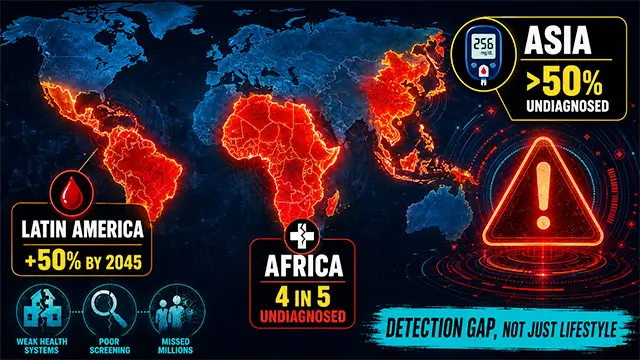
- In Asia, China, India, and Indonesia together account for more than half of the world's undiagnosed diabetes cases.
In Africa, 4 in 5 adults with diabetes are undiagnosed, with Egypt, Algeria, and other countries exceeding 15% diagnosed diabetes cases.
In Latine Africa, cases of diabetes 2 is estimated to increase 50% by 2045.
In fact, the gap in diabetes between countries is not merely a matter of lifestyle but also a failure of health systems to detect, diagnose, and treat a preventable disease.
🕵️ Why So Many People Are Missing Diabetes?
You may wonder: can diabetes go unnoticed?
The short answer is "yes" and it happens more often than you think.
Type 2 diabetes, which accounts for over 90% of all diabetes cases, can develop slowly over years. The early symptoms include:
increased thirst
frequent urination
fatigue
blurred vision
All of them are easy to dismiss as stress, aging, or just "feeling off".
Moreover, many people have no symptoms at all until complications arise.
According to doctors, "by the time someone notices foamy urine, swelling, or persistent fatigue, the disease may already be in its middle or late stages".
❓Why More People Are Diagnosed As Diabetes?
Many factors contribute to the diabetes crisis, including the food option, lifestyle, obesity, and aging population.
1. The Rise of Ultra-Processed Foods: Highly refined diets packed with white rice, refined wheat, oils, sugar, and ultra-processed snacks lead to rapid glucose spikes. These foods are often cheaper and more accessible than fresh, whole foods, making them the default choice for low-income families in cities across the Global South.
2. Sedentary Lifestyles: Sedentary jobs, automated machines, and long hours of screen time have replaced physically demanding work. A sedentary lifestyle lowers insulin sensitivity, directly increasing the risk of developing type 2 diabetes.
3. The Obesity Epidemic: Obesity is the single strongest risk factor for type 2 diabetes. Rising obesity rates, driven by poor diet and physical inactivity, have fueled the diabetes surge in every region of the world.
4. Aging Populations: As life expectancy increases globally, more people are living into the age range where type 2 diabetes typically develops.
🎯How to Prevent Diabetes: What You Can Do
Although the diabetes is not optimistic around the world, we can take some measures to prevent it.
1.🍬Cut the Sugar
The World Health Organization recommends limiting free sugars to less than 10% of total daily energy intake.
What counts as "free sugars"? Added sugars in processed foods, sugary drinks, fruit juices, and syrups. Start by replacing one sugary drink a day with water and watch your sugar intake drop significantly.
2. ✨Choose Better Carbohydrates
Not all carbs are created equal. Refined carbohydrates, like white bread, pastries, white pasta, digest quickly and flood your bloodstream with glucose.
Instead, choose whole grains, legumes, and vegetables that release energy slowly and keep your blood sugar stable.
3. 🏃♀️Move Your Body
Physical activity is often called the "cure" for a sedentary lifestyle. Health authorities recommend at least 150 minutes of moderate-intensity aerobic exercise per week, that is just 30 minutes a day, five days a week.
Walking, jogging, swimming, or cycling all count. The best time to exercise? 30 minutes to one hour after a meal, which helps control post-meal blood sugar spikes.
4.🏥Get Regular Screening
Get screened is a good way to prevent from diabetes. If you plan to get screened, you need to focus on the three key tests:
fasting blood glucose
HbA1c (glycated hemoglobin)
kidney function tests.
Conclusion
The global diabetes epidemic is accelerating, and it is hitting the developing world hardest. But this is not inevitable. Type 2 diabetes is largely preventable through lifestyle changes: cutting sugar, eating whole foods, staying active, and getting screened.
FAQ
Can diabetes be cured?
Type 1 diabetes cannot be cured and requires lifelong insulin therapy. Type 2 diabetes, which accounts for over 90% of cases, can be put into remission through significant lifestyle changes.
What is the difference between prediabetes and diabetes?
Prediabetes means your blood sugar levels are higher than normal but not yet high enough to be diagnosed as diabetes.
Is it true that eating too much sugar causes diabetes?
Not directly. Type 2 diabetes is caused by a combination of genetics, lifestyle, and metabolic factors.
Disclaimer
This article is for informational purposes only and does not constitute medical advice. The information provided here is not intended to diagnose, treat, cure, or prevent any disease. Always consult a qualified healthcare professional before making any changes to your diet, exercise routine, or health screening practices.

Hi, I'm Chelsea Parker, a globetrotter, storyteller, and life enthusiast with a knack for turning everyday experiences into unforgettable lessons. From surviving $20-a-day adventures in Southeast Asia to mastering mindfulness in my daily routine, I share relatable and entertaining tales that inspire you all to explore, grow, and thrive. When i'm not writing, you may find me chasing sunsets, savoring street food, or dreaming up my next big adventure.